
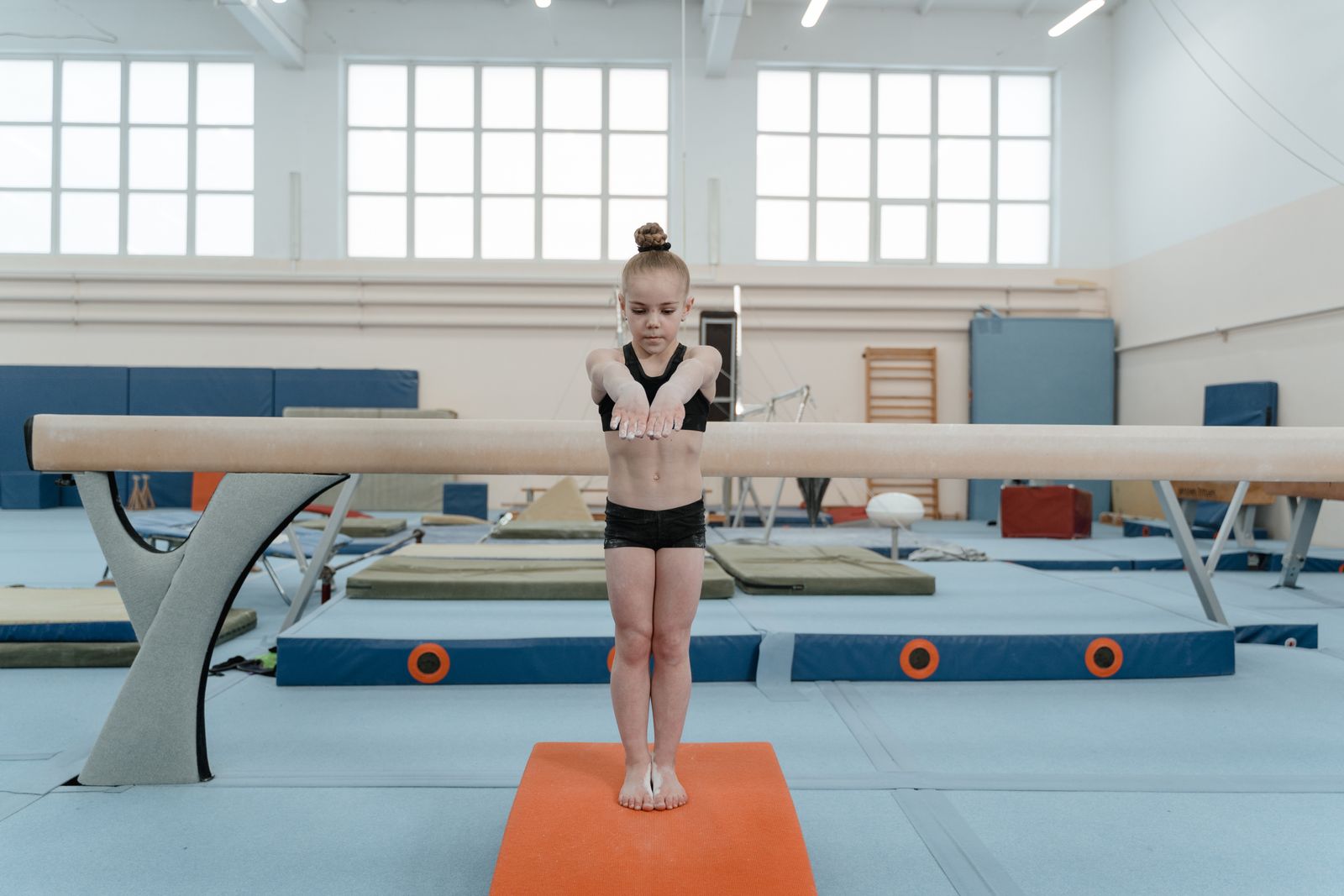
If you have a young gymnast at home, you already know the signs: cartwheels down the hallway, handstands against the fridge, and a couch that has quietly become a vault. The energy is wonderful. The hard floors and coffee-table corners? Less so.
The good news is that a few smart pieces of home gymnastics equipment turn “please stop flipping in the living room” into a safe little practice corner. This list covers exactly what to buy (and in what order), from the first folding mat to a kip bar for the kid who lives on the bars at practice. We’ve also flagged what’s worth skipping, because a lot of gymnastics gear is sold to excited parents rather than to actual gymnasts.
Before You Buy: Set Up a Safe Practice Space
A couple of minutes of planning saves you from buying a beam that doesn’t fit or a bar that wobbles. Here’s what to sort out first.
Measure Your Space (Twice)
Most home gymnastics happens on the floor, so floor space is the real limit. A good rule of thumb:
- For mats and tumbling: a clear strip about 4 ft wide and 8 to 10 ft long, with no furniture corners at either end.
- For a floor beam: an 8 ft beam needs about 10 ft of clear length so your child can step off both ends safely.
- For a kip bar: check the bar’s footprint and the swing space around it. Your gymnast’s feet travel well beyond the base when they swing, so allow extra room in every direction and keep walls, windows and ceiling fans out of reach.
Carpet is fine for mats. On hardwood or tile, choose mats with a non-slip bottom, or put a thin rug pad underneath so nothing slides mid-cartwheel.
Talk to the Coach
This is the single most useful (and free) step. Ask your child’s coach what they should practice at home and what they should only do at the gym. Most coaches are happy for kids to work on flexibility, conditioning, handstands, cartwheels and beam walking at home. New skills, flips and anything with a hard landing belong at the gym, with a coach spotting and real landing mats underneath.
Make Supervision the Rule
Home equipment is safest when a grown-up is in the room. Set simple house rules: one gymnast on the equipment at a time, no flips at home, and everything gets checked (bar tightened, mats connected) before practice starts.
The Home Gymnastics Equipment List
Okay, here’s the main event. Start with mats, add a beam, and only then think about a bar. That order matches how most kids progress, and it spreads the spending out too.
Heads up: some links on this page may be affiliate links, which means we may earn a small commission at no extra cost to you. As an Amazon Associate, I earn from qualifying purchases. It helps cover the costs of running this website and never changes what we recommend.
Gymnastics Mats: Buy These First
If you only buy one thing, make it a good folding mat. It protects your floors, it gives cartwheels and handstands a soft landing, and it folds flat behind the couch when you need the living room back.
- Thickness: Around 2 inches is the sweet spot for tumbling basics at home. Thinner yoga-style mats aren’t enough for gymnastics.
- Size: A long mat (8 to 10 ft) gives room for a cartwheel. Shorter 6 ft mats work for younger kids and tight spaces.
- Connectors: Hook-and-loop strips on the ends let you join two mats into a longer runway later.
- Easy cleaning: A wipeable vinyl cover is a must. Little feet are not always clean feet.
Folding Gymnastics Mat Best Overall Pick (10 x 4 ft, room for a cartwheel!)
BalanceFrom 10 x 4 ft 4-Panel Folding Gymnastics Mat, 2 in
Rated 4.7 out of 5 stars by 12k+ Amazon shoppers
- Four-panel 10 ft x 4 ft x 2 in folding mat with carrying handles
- Hook-and-loop edges let you connect several mats into a longer runway
- Double-sided vinyl cover that wipes clean
Folding Gymnastics Mat Best Budget Pick (great first mat for younger kids!)
BalanceFrom 6 x 4 ft 4-Panel Folding Gymnastics Mat, 2 in (Pink)
Rated 4.6 out of 5 stars by 170+ Amazon shoppers
- Four-panel 6 ft x 4 ft x 2 in folding mat with carrying handles
- Hook-and-loop edges connect it to other BalanceFrom mats
- Double-sided vinyl cover with a textured, non-slip finish
Incline Mats and Training Shapes
Once the basics are solid, an incline mat (gymnasts call it a “cheese mat”) makes forward rolls, backward rolls and walkovers easier to learn, because the slope does part of the work. It’s one of the most-used pieces in any gym for a reason.
Incline Mat Best Pick (the “cheese mat” for rolls and walkovers!)
Matladin Folding Cheese Wedge Incline Mat, 55 x 28 x 14 in
Rated 4.8 out of 5 stars by 600+ Amazon shoppers
- 55 x 28 x 14 in wedge that folds in half for storage
- 840-denier vinyl cover over high-density EPE foam
- Zippered cover and carry handles
Cartwheel and Handstand Training Mat Best Pick (hand and foot guides!)
Z Athletic Kids Balance Beam and Cartwheel Trainer Folding Mat
Rated 4.6 out of 5 stars by 990+ Amazon shoppers
- Reversible: hand and foot graphics for cartwheels on one side, a beam line on the other
- Open-cell foam under 18 oz vinyl, 1.5 inches thick
- Unfolds to 2 x 6 ft; wipes clean with soap and water
Back Walkover Trainer Best Pick (foam shape for back bends!)
A quick note: back walkovers should be learned at the gym with a coach spotting. At home, use the trainer only for skills your child already has, on a mat, with you in the room.
Goplus 24.5 x 26 in Octagon Gymnastics Mat
Rated 4.7 out of 5 stars by 220+ Amazon shoppers
- Foam octagon, about 24.5 x 26 in, for backbends, walkovers and rolls
- Waterproof zippered cover wipes clean
- No assembly or pump needed
Tumbling: The Air Track
An air track is an inflatable tumbling strip. It’s springier than a regular mat, which kids love, and it deflates into a duffel-size bag for storage. It’s a fantastic upgrade for a gymnast who tumbles every day, but it’s a “second purchase,” not a first one. Make sure the pump is included, and keep it on a soft surface away from walls.
Inflatable Air Track Best Pick (electric pump included!)
AKSPORT Air Tumble Track, 10 x 3.3 ft x 4 in, with Electric Pump
Rated 4.6 out of 5 stars by 3.6k+ Amazon shoppers
- 10 x 3.3 ft track, 4 in thick when inflated
- Comes with an electric air pump, carry bag and repair kit
- Velcro end connectors join two tracks into a longer run
Balance Beams
Beam is the event where practice at home pays off the most. Walking, turning, leaping and holding positions on a beam builds the balance and confidence that carry over to the full-height beam at the gym.
- Start low: A folding foam beam that sits right on the floor is the safest first beam. A wobble just means stepping onto the floor.
- Go higher later: Raised beams with legs are for kids who are already steady on a floor beam, and they should always sit on a mat.
- Length: An 8 ft beam gives enough room for a short sequence. Shorter beams are fine for little ones.
Folding Floor Balance Beam Best Pick (8 ft, sits right on the floor!)
Marfula 8 ft Folding Foam Floor Balance Beam
Rated 4.8 out of 5 stars by 2k+ Amazon shoppers
- 8 ft long with a 4 in top, the same width as a competition beam
- High-density EVA foam with a suede cover and anti-slip bottom
- Hook-and-loop strips keep it straight when open and closed when folded; carry bag included
Low Raised Balance Beam Best Pick (adjustable legs, for confident beam walkers!)
Marfula Adjustable 8 ft Balance Beam (9 to 17 in)
Rated 4.7 out of 5 stars by 1k+ Amazon shoppers
- 8 ft beam with a 4 in top, the same width as competition
- Two modes: 9 in floor height, or raised from 13 to 17 in
- Wood beam body on steel legs with a faux suede cover
Bars: The Home Kip Bar
A kip bar is a single horizontal bar on a free-standing base. It’s the biggest purchase on this list and the one that needs the most care, so read the weight limit and the footprint before you buy.
- Weight rating: Check the usage limit for swinging, not the bigger static number some listings advertise. Swinging puts much more force on a bar than hanging still.
- Adjustable height: Lets the bar grow with your gymnast.
- Stability: Wide feet, a sturdy base, and bolts you re-check before every practice.
- Landing mat: Always put a thick mat under the bar. That’s what the crash mat below is for.
Kip Bar Best Pick (adjustable height, check the weight limit!)
Z Athletic Expandable Kip Bar
Rated 4.6 out of 5 stars by 1.4k+ Amazon shoppers
- Adjusts from 36 to 58 in with 9 height settings and locking pins
- Steel legs and a fiberglass-core rail with a splinter-free veneer
- Rated for a 120 lb user; 300 lb direct pull-down limit
Gymnastics Crash Mat Best Pick (thick landing mat for under the bar!)
We Sell Mats Bi-Folding Crash Landing Mat, 4 x 8 ft x 4 in
Rated 4.7 out of 5 stars by 330+ Amazon shoppers
- 4 x 8 ft bi-fold pad, 4 in thick, with sponge-core foam
- Heavy-duty 18 oz vinyl top with mesh sides
- Also sold in 4 x 4 ft and in 8 in or 12 in thickness
Parallettes Best Pick (low bars for L-sits and handstand holds, on a mat!)
AmazeFan Parallettes, 16.6 x 10 x 10 in
Rated 4.7 out of 5 stars by 500+ Amazon shoppers
- 16.6 x 10 x 10 in carbon steel bars, 3.5 lbs per the listing
- Thick anti-slip feet that rotate to level the bars
- Comes apart for storage
Flexibility and Conditioning
Strength and flexibility are where home practice quietly makes a huge difference. A stretching strap helps kids hold stretches properly instead of bouncing (which coaches hate), and it costs less than a pizza.
Stretching Strap Best Pick (loops make stretches easier to hold!)
Slim Panda Kids 8-Loop Stretch Strap Set, 2 Pack
Rated 4.6 out of 5 stars by 570+ Amazon shoppers
- Two straps: 43 in and 35 in, 1.6 in wide
- 8 loops on each strap to set the stretch length
- Light enough to keep in a gym bag
What to Wear and What to Pack
Gymnasts don’t need much: fitted clothes so the coach can see their form, hair tied back, no jewelry, and bare feet. A dedicated bag keeps everything in one place for practice days.
Gymnastics Leotard Best Pick for Girls
GK Stars Girls’ Gymnastics Leotard
Rated 4.7 out of 5 stars by 1.4k+ Amazon shoppers
- Sized from toddler to girls; GK says to measure using its size chart before ordering
- Lightweight, breathable stretch fabric
- Hand wash inside out, separately
Boys’ Compression Shorts Best Pick (fitted, stay put on bars and floor!)
Runhit Youth Boys’ Compression Shorts
Rated 4.7 out of 5 stars by 560+ Amazon shoppers
- 88% polyester, 12% spandex 4-way stretch fabric
- Flat seams to reduce chafing; machine washable
- Fitted cut stays put during handstands and rolls
Gymnastics Bag Best Pick (separate pocket for shoes and wet stuff!)
LEDAOU Kids Gym Duffle Bag with Shoe and Wet Compartments
Rated 4.7 out of 5 stars by 610+ Amazon shoppers
- Three sections: main, wet, and a ventilated shoe compartment
- 18 x 8 x 11.6 in; water-resistant polyester
- Carry with handles or a removable shoulder strap
Gymnastics Grips Best Pick for Beginners (only once the coach says so!)
PUSH Athletic Gymnastics Youth Hand Grips
Rated 4.1 out of 5 stars by 740+ Amazon shoppers
- Leather palms with hook-and-loop wrist straps
- Youth sizes small to XL; check the size chart
- No dowel: a simple palm guard for newer bar gymnasts
The Things Parents Usually Forget
These are the small things that make the big equipment work better (and last longer).
- A rug pad or non-slip underlay: Stops mats from sliding on hard floors.
- Disinfecting wipes: Wipe mats down after each session, especially if friends come over to practice.
- Hair ties and bobby pins: Stash a few in the gym bag. They vanish faster than socks.
- A water bottle: Practice at home still counts as practice.
- A wall hook or corner spot for folded mats: Mats that are easy to put away actually get put away.
- A simple practice chart: Some kids love ticking off “10 handstands, 5 bridges, 3 beam walks.” It turns practice into a game.
What You Probably Don’t Need
Gymnastics gear marketing can be very persuasive. Here’s where you can save your money.
- A full-size competition beam: Too high and too heavy for most homes. A floor beam builds the same skills more safely.
- A trampoline for “gymnastics practice”: Backyard trampolines are not gymnastics equipment, and many coaches discourage flips on them. The American Academy of Pediatrics strongly discourages home trampoline use because of injury risk.
- Grips for young beginners: Kids who are just starting on bars usually don’t need grips. Wait until the coach recommends them.
- Every training shape in the catalog: One folding mat and one incline mat cover most home drills. Add more only if your gymnast keeps asking for a specific skill.
- Expensive leotards for practice: Save the sparkly ones for meets. Practice leotards get washed constantly, so durable and affordable wins.
Smart Ways to Shop for Gymnastics Equipment
Gymnastics gear adds up fast, so here’s how to spread it out without missing anything important.
- Buy in the right order: Mat, then beam, then incline mat or air track, then a bar. Each step matches what kids are ready for.
- Think about growth: Adjustable bars and connectable mats grow with your gymnast instead of being outgrown in a year.
- Ask the gym: Gyms sometimes sell older mats when they upgrade, and other gym parents are a great source of outgrown leotards.
- Gift it: Gymnastics equipment makes a great birthday or holiday gift. Grandparents love a “big present” that gets used every day.
FAQ
What gymnastics equipment should I buy first for home? A folding gymnastics mat around 2 inches thick. It’s the safest, most versatile piece, and almost every home drill (cartwheels, handstands, bridges, rolls) uses it. Add a floor balance beam next.
How wide is a balance beam in gymnastics? A competition beam is 10 cm wide, which is just under 4 inches. Most home floor beams are a little wider (often around 4 inches), and that extra stability is a good thing for practice.
What should my child wear to gymnastics? Girls usually wear a leotard (with shorts over it if they like), and boys wear fitted shorts and a T-shirt or a gymnastics singlet. Hair should be tied back, jewelry comes off, and kids practice barefoot.
Is it safe to practice gymnastics at home? It can be, with the right setup: mats on a non-slip floor, plenty of clear space, an adult in the room, and no new skills or flips without a coach. Ask your child’s coach which drills are good for home practice.
Are kip bars safe for kids at home? A well-built kip bar on a thick landing mat, used under supervision, is a common piece of home equipment for gymnasts who already train on bars at a gym. Stay within the manufacturer’s weight limit, check the bolts before every session, and keep the area around the bar clear.
What should my child bring to gymnastics practice? A water bottle, hair ties, a snack for after, any grips the coach has asked for, and a bag to keep it all together. Many gyms also ask kids to bring a hoodie or warm-up layer for the start of class.
